
Reign Beauty and Vitality is a Henderson practice offering personalized aesthetic and restorative care for people seeking support for their appearance and well-being. In 2024, the Global Wellness Institute counted 201,861 spas worldwide, with $157 billion in revenue. Spa-industry revenue grew by 7.4% a year from 2007 through 2024.
Those figures show how much people value care for their well-being. At Reign, your needs and goals can shape a conversation about beauty and wellness. This page explains the practice’s services and offers ways to think about a consultation. Readers can use their goals and health needs to frame a conversation about suitable care.
Key Takeaways
- Reign offers aesthetic care and restorative medicine in Henderson.
- Its aesthetic services include injectables and LaseMD Ultra® laser treatments.
- Restorative services include personalized hormone therapy and other therapies.
- Restorative medicine requires medical clearance and appropriate lab work.
- A consultation can help connect your goals with a suitable service.
Reign’s Henderson location and service area
Reign Beauty and Vitality is based in Henderson and serves clients across Clark County. Its stated service area includes several nearby communities, so location can help you plan the experience of arranging care.
Reign’s listed service area includes these Clark County communities:
- Summerlin
- Las Vegas
- Lake Las Vegas
- Chinatown
- Silverado Ranch
- Arts District
The listed communities describe Reign’s stated service area, not a promise about travel time or availability.
That distinction can make planning simpler. A client in Las Vegas may weigh the drive differently from someone already in Henderson, while a client in Summerlin or Silverado Ranch may have other routes to consider.
People looking for medical spa services near me can use their home or work location to compare travel options. A med spa near me may be convenient, but the setting and the care offered matter too.
Before arranging care, consider the time needed to travel, your schedule and how often you may need to visit. The right location is one that fits the practical side of getting care, not just the map.
Use the listed communities to decide whether Reign’s location fits your travel plans.
How a medical spa differs from other spas
A medical spa combines spa services with medical or wellness care under the on-site supervision of a licensed healthcare professional. That medical role distinguishes it from settings focused on day-use relaxation services.
The Global Wellness Institute defines a medical spa by licensed, on-site healthcare supervision and the mix of spa services with medical therapies. A medical spa may combine aesthetic care with traditional, alternative or cosmetic medical therapies.
| Spa type | Typical service model | Setting or focus |
|---|---|---|
| Day spa | Day-use massages, facials and body treatments | Services for a visit without an overnight stay |
| Destination spa or health resort | Spa treatments, fitness, mind-body care, nutrition counseling and medical services | A stay focused on health, prevention or treatment |
| Hotel or resort spa | À la carte services for guests and local visitors | A hotel or resort setting |
| Thermal or mineral-springs spa | Spa care using natural mineral, thermal or seawater, sometimes with bathing | Natural springs or seawater resources |
Day spas often center on familiar services, while health resorts may add fitness, nutrition and medical care. Hotel spas serve people staying at the property as well as local visitors.
Thermal or mineral-springs spas use natural water as part of treatment or recreation. The American Med Spa Association’s patient guide also explains how medical-spa care differs from traditional spa services.
A medical component makes provider qualifications and treatment fit important considerations. The service model and practitioner qualifications are useful points to compare when choosing a setting.
Medical Spa Services at Reign
Reign’s services span aesthetic injectables, LaseMD Ultra® laser care and restorative medicine. Each area has a different focus, and a client’s goals guide the personalized approach.
Reign offers three main service areas, from aesthetic care to restorative therapies. The table summarizes the examples and aims the practice states for each one.
| Service area | Examples at Reign | Stated focus |
|---|---|---|
| Aesthetic injectables | Neuromodulators, dermal fillers and PDO threads | Enhancing features and softening signs of aging |
| LaseMD Ultra® laser care | LaseMD Ultra® laser treatments | Improving skin quality |
| Restorative medicine | Personalized hormone therapy and restorative therapies | Supporting balance, health and long-term vitality |
The service names offer a starting point, not a treatment decision. A consultation can connect your concerns with the stated focus of an option and the health context that may shape care.
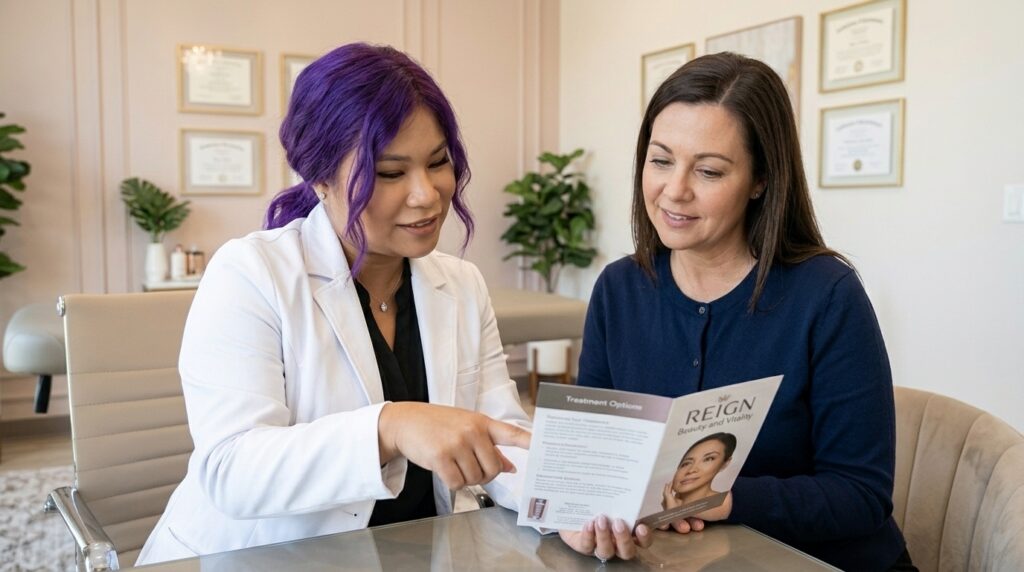
Reign says its services are tailored to client goals and guided by clinical expertise. Its discussion of coordinated skin-care planning describes how assessment can help shape personalized care.
A client’s goals provide the starting point for discussing which service area may fit.
Injectable treatments for facial aesthetics
Reign offers neuromodulators, dermal fillers and PDO threads as injectable options for enhancing features and softening signs of aging. Their roles differ, so the feature you want to address can guide the discussion.
Reign’s Master Injectors perform its injectable treatments. The table gives a broad view of each category, not a promise about an individual result.
| Treatment type | Common aesthetic role | Reign’s stated approach |
|---|---|---|
| Neuromodulators | Soften some signs of aging | Performed by Master Injectors |
| Dermal fillers | Enhance features | Performed by Master Injectors |
| PDO threads | Support facial aesthetic goals | Performed by Master Injectors |
The broad category alone cannot show which option suits a specific feature or concern. A practitioner can discuss the intended role and how an approach may fit your goals.
In 2025, neuromodulators and hyaluronic fillers accounted for 80% of minimally invasive plastic surgery procedures. That figure gives broad industry context, not a measure of Reign’s treatment volume.
Understanding the 2025 procedure share does not tell you which service is right for you. A personal discussion can focus on the feature you want to address and your own priorities.
Discuss the feature you want to address so the practitioner can consider the appropriate approach.
LaseMD Ultra® for skin quality
Reign’s LaseMD Ultra® laser treatment is designed to improve skin quality. That is its stated aim, not a guarantee of a particular result for every client.
A consultation can connect your skin concerns with the service’s focus on skin quality. You can describe what you notice and ask how the treatment relates to that concern.
A clear description helps keep the conversation specific. You might name the area that concerns you, when you began to notice it and what change would feel meaningful to you.
The discussion can then focus on whether LaseMD Ultra® fits that concern. The treatment’s stated goal describes its purpose, while individual outcomes can differ.
It may help to bring your questions in writing. That gives you a simple way to track what the service aims to address and what the practitioner says about your own skin.
Bring your specific skin concern to a consultation so the practitioner can discuss whether this treatment fits it.
Hormone therapy and personalized wellness
Reign’s hormone therapy is personalized and intended to support balance, energy, mood, metabolism and overall well-being. These are stated goals, not promised effects for every client.
Reign describes hormone therapy as medically guided and tailored to the client. Your health context and goals can shape the treatment discussion.

Goals addressed through hormone therapy
The service is intended to support a sense of balance and well-being. Reign also names energy, mood and metabolism among the areas it aims to support.
Those goals can mean different things from person to person. Naming the change you hope to discuss helps keep the conversation grounded in your experience.
Medical guidance and individual planning
Reign says hormone treatment uses medically guided plans. A plan is tailored to the client rather than treated as a standard choice for everyone.
Your health history and current concerns matter when discussing whether a plan may fit. The practitioner can consider that context alongside what you want to address.
A client’s goals and health context belong in the conversation about a hormone-therapy plan.
Restorative medicine and vitality support
Reign’s restorative medicine therapies are intended to support balance, health optimization and long-term vitality. The stated focus is broad, so a client’s health profile informs the treatment discussion.
Reign describes its plans as personalized and clinically guided. It also says care is sourced from licensed pharmacies and trusted medical suppliers.
Restorative medicine is meant to address health goals through a plan shaped around the client. The stated aims include restoring balance, supporting health and helping sustain vitality over time.
Those aims do not name one standard service for every person. Your health profile can help guide a conversation about which approach may be considered and why.
Reign’s service information describes its aesthetic and restorative care as personalized. The practice says clinical guidance shapes plans, while licensed pharmacies and trusted medical suppliers provide care products.
Ask how a proposed plan relates to your health profile and stated goals.
Screening before restorative services
Reign requires medical clearance and appropriate lab work before providing restorative medicine services. Screening comes first because it helps shape a plan around a client’s health profile.
Medical clearance and appropriate lab work are required before these services begin. Reviewing health information helps support safety and guide care.
| Screening element | Role in planning | What it helps personalize |
|---|---|---|
| Medical clearance | Confirms readiness for restorative services | Whether care may proceed |
| Appropriate lab work | Adds health information for review | Plan details based on results |
| Health-profile review | Considers the client’s health context | How the plan fits individual needs |
These steps take place before restorative medicine services. Together, they help the practitioner consider a clinically guided plan in light of the client’s health profile.
You can prepare a few details before a screening conversation:
- Your health history
- Your current health concerns
- Your goals for care
Clear, relevant details make it easier to discuss what may shape a plan. Screening allows the treatment plan to reflect the client’s health profile.
Nika Asistio and Reign’s clinical leadership
Nika Asistio, APRN, FNP-C, is Reign Beauty and Vitality’s Medical Director and lead practitioner. Her named role helps clients understand who leads care at the practice.
Asistio is a Board-Certified Family Nurse Practitioner licensed in Nevada. She also holds a Master Injector designation and has more than eight years of nursing experience.
A Medical Director and lead practitioner provide a clear point of reference when you are learning about a service. Clients can ask how that leadership connects to the care they are considering.
Credentials and experience can help you understand a practitioner’s background. They do not replace a direct discussion about who will perform a specific service or guide its care.
Reign’s team includes practitioners with defined roles in client care. Knowing the name and role of the person involved can make the first conversation more focused.
Clients can ask which practitioner will guide the service they are considering.
What to expect from treatment results and device safety
Reign describes its intended aesthetic and restorative results as subtle, harmonious and long-lasting, while aesthetic-device procedures can involve risks and temporary effects. Individual results can differ from what you hope to see.
The FDA says device procedures may not produce the desired result, may have temporary effects and carry risks. That advice can help set realistic expectations before treatment.
Setting realistic expectations
A stated treatment aim is not a promise of an individual outcome. The FDA advises discussing possible benefits, risks and whether you are a suitable candidate with a healthcare provider.
The FDA’s guidance on aesthetic-device procedures notes that devices can be regulated based on their intended use and effects on body structure or function. That means the device’s purpose matters when you discuss care.
Discussing aesthetic-device procedures
Ask how the proposed procedure may help with your concern and what risks apply. You can also ask about the provider’s training and experience with that procedure.
These questions can make the conversation more concrete. They help you understand the proposed care, its limits and the provider’s relevant background.
Discuss benefits, risks, candidacy and the provider’s relevant training before an aesthetic-device procedure.
Checking clinical scope and practitioner qualifications
In Nevada, aesthetic and cosmetologic procedures are among the nursing practice topics considered through a formal practice-decision process. The practitioner’s scope is one part of understanding who can provide care.
The Nevada State Board of Nursing lists aesthetic and cosmetologic procedures among practice-decision topics. Its Nursing Practice Advisory Committee reviews requests about practice decisions.
Practice-decision requests address risks, benefits, alternatives, education requirements and relevant statutes or regulations. The process considers how a procedure relates to nursing practice.
The American Society of Plastic Surgeons’ med-spa guidance also recommends checking provider training and experience when weighing care.
These questions can help you understand a practitioner’s role:
- Who will perform the procedure?
- What relevant education and experience does that practitioner have?
- How does the service fit the practitioner’s authorized scope?
A clear account of the practitioner’s training and role helps a client assess who will provide care.
Preparing for a useful consultation
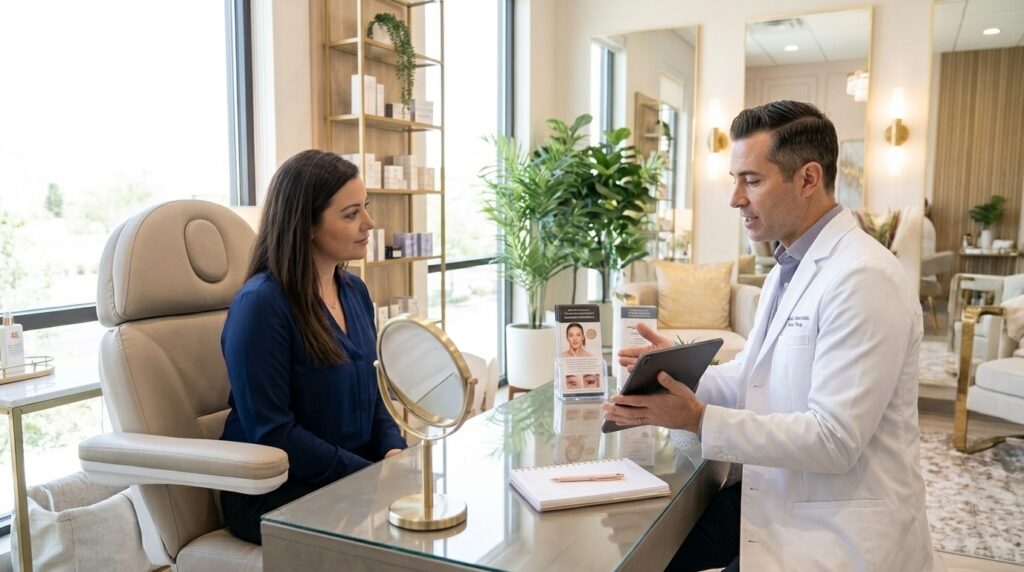
A useful consultation begins with one clearly stated goal and the health context that may shape care. That focus helps make a discussion about personalized services more specific.
Reign says its treatments are tailored to client goals and guided by clinical expertise. You can prepare by deciding what matters most before the visit.
Clarifying your goals and concerns
Identify the appearance or wellness concern you most want to discuss. Then think about what a satisfactory outcome would mean to you, rather than relying on a broad idea of improvement.
A short, clear goal can help keep the conversation on track. For example, you might describe the change you hope to see or the concern that affects your day most.
Discussing health context and options
Share health details that may matter to the proposed care. Ask how the service connects to your goal, what the plan involves and which alternatives may be considered.
These prompts can help you prepare:
- Which service addresses my main goal?
- What health information is relevant?
- What should I understand about the plan and expected outcome?
Reign’s treatment-planning information describes consultations that consider client concerns and goals. Leave the conversation able to describe the proposed service and its connection to your goal.
Practical details for planning a visit
Reign’s listed payment methods are cash, major credit cards, Apple Pay and Zelle. Accepted methods can change, so confirm the current policy when arranging a visit.
For a $200 traditional spa service, a 15%-20% tip equals $30-$40. Aesthetic medical procedures can follow different gratuity policies.
For traditional spa care, gratuity is often tied to service quality and customary tipping. A medical aesthetic service may use a different policy, so the same rule may not apply.
Keep the payment details in mind when planning:
- Cash
- Major credit cards
- Apple Pay
- Zelle
Payment policy and gratuity expectations are separate questions. You can ask about each one when arranging care, especially if you are unsure whether a service follows traditional spa customs.
Confirm the current payment and gratuity policies when arranging the visit.
Matching a treatment plan to your goals
A suitable treatment choice begins with the client’s goal and the practitioner’s clinical assessment. A useful comparison looks at what a plan addresses and how it fits your needs.
A personalized plan is tailored to an individual, while a service package generally groups visits or services together. This distinction does not mean Reign offers a particular package.
Understanding a service package
People use “service package” to describe services or visits sold or arranged together. A personalized treatment plan instead describes care chosen for one person’s goals and assessment.
The terms do not guarantee the same services or number of visits. Ask what each proposed plan includes before deciding whether it matches your needs.
Comparing options by goal
There is no single best medical spa service for every client. The starting point is your stated concern and a clinically guided discussion about possible care.
Compare the options by asking about:
- The goal each option addresses
- Your health context
- The treatment-plan details
Choose by fit with your priority and health context, not by a universal ranking of treatments.
A clear explanation of the plan can help you judge whether its purpose matches your priority. Ask for a clear explanation of how the proposed plan connects to your priority.
Conclusion
A conversation about your goals is a practical first step toward learning which Reign service may suit you. You can share the concern you want to address and ask how a proposed service fits.
Reign Beauty and Vitality is located at 750 Coronado Center Dr., Suite 100, Henderson, NV 89052. Visit reignbeautyvitality.com for business information.
Contact Reign Beauty and Vitality at 750 Coronado Center Dr., Suite 100, Henderson, NV 89052, by phone at (702) 533-0773 or by email at care@reignbeautyvitality.com to arrange a next step.